In medium-voltage (MV) electrical substations, industrial power distribution networks, and renewable energy switchgear (operating from 3.3kV up to 36kV and above), selecting the right switching apparatus is fundamental to system safety, operational continuity, and cost efficiency.
Engineers and switchgear panel builders frequently choose between three essential primary devices:
Disconnector (Isolator)
Load Break Switch (LBS)
Circuit Breaker (CB / VCB)
Although all three devices mechanically open and close electrical circuits, their capabilities regarding load current interruption, arc extinguishing, and short-circuit fault clearing are radically different under the international IEC 62271 standard series.

A Disconnector (also known as an Isolator Switch, such as the XUCKY GN19-12 series) is an off-load mechanical switching device designed primarily for human safety during maintenance.
Key Engineering Attributes:
No-Load Operation Only:
● Disconnectors possess zero arc-breaking capability. They must only be operated after the load current has been disconnected by an upstream or downstream circuit breaker. Opening an isolator under load produces severe, sustained electrical arcing that destroys equipment and endangers operators.
Visible Physical Safety Gap:
● Unlike enclosed circuit breakers where contact position is hidden, a disconnector provides a clearly visible air gap between its stationary and moving contacts, confirming that the isolated section is de-energized.
Mechanical / Electrical Interlocking:
● Disconnectors are universally interlocked (via key interlocks, mechanical linkages, or electromagnetic interlocks) with circuit breakers and earthing switches to ensure a strict operating sequence:
Breaker OPEN
Disconnector OPEN
Earthing Switch CLOSED.
Typical Applications:
● Busbar sectionalizing, bypass switching in substations, and incoming maintenance isolation in medium-voltage switchgear cubicles.
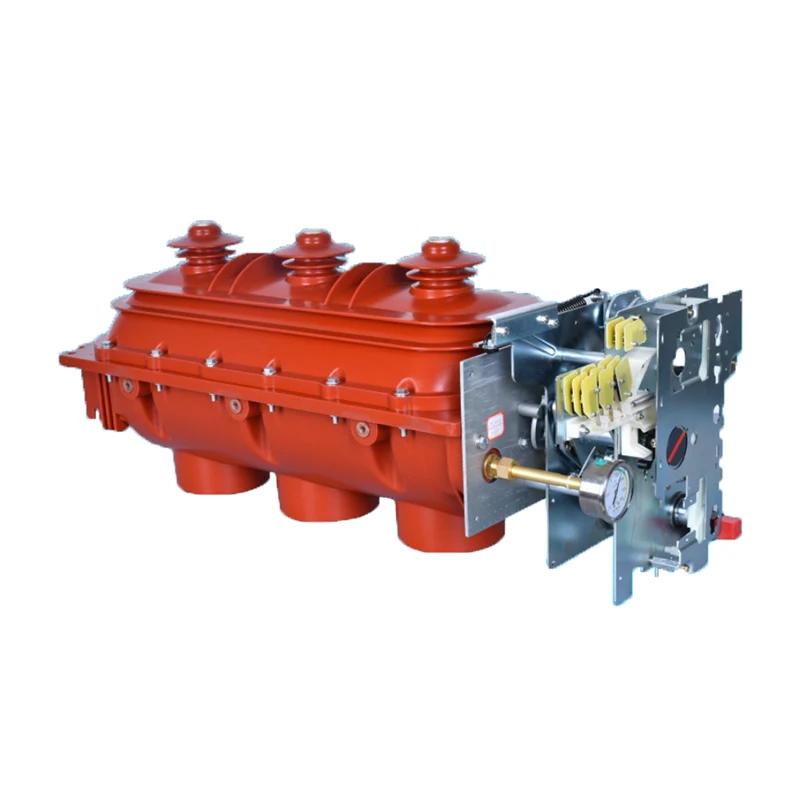
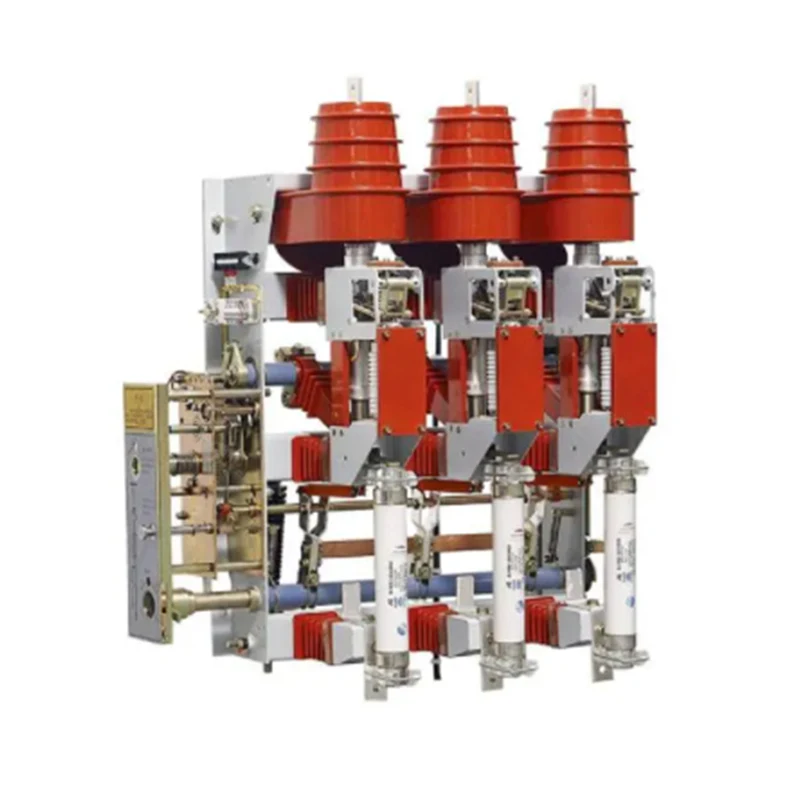
A Load Break Switch (such as the XUCKY FN7-12 series) is an on-load switching device engineered to make, carry, and interrupt normal continuous operational load currents (typically 630A).
Key Engineering Attributes:
Normal Load Breaking:
● Equipped with arc chutes (in air-insulated designs) or SF6/vacuum chambers that rapidly de-ionize and quench the arc formed during normal operational switching.
No Autonomous Fault Trip:
● A standard load break switch cannot interrupt prospective short-circuit fault currents (e.g., 20kA–31.5kA).
Switch-Fuse Combination (IEC 62271-105):
● When paired with high-voltage current-limiting fuses (such as the FN7-12R), the fuses clear high-magnitude short-circuit faults within milliseconds, while a striker pin mechanism triggers the switch to open all three phases, preventing single-phasing of downstream transformers.
Cost-Effective Alternative:
● In secondary distribution networks, Ring Main Units (RMU), and distribution transformer protection up to 1250kVA–2000kVA, a load break switch + fuse combination provides reliable protection at a fraction of the cost of a full circuit breaker.
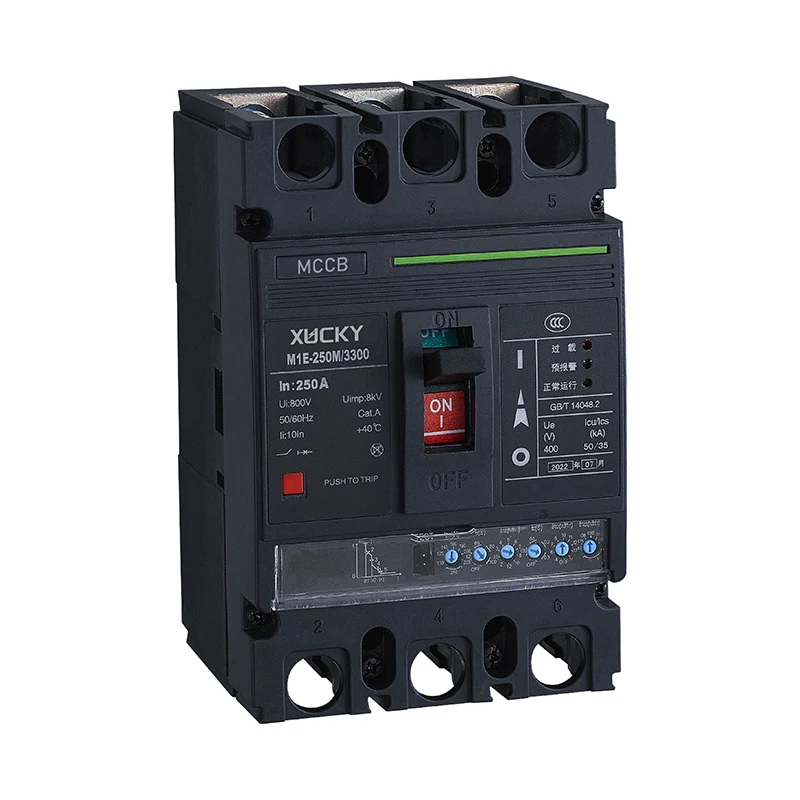
A Circuit Breaker (such as the XUCKY VSG-12 series Indoor Vacuum Circuit Breaker) is the master protection and heavy-duty switching device in modern power systems.
Key Engineering Attributes:
Full Fault Interruption Capability:
● Circuit breakers are rated to interrupt both normal operating currents and extreme short-circuit fault currents (typically 20kA, 25kA, 31.5kA, up to 40kA/50kA) within 2 to 3 cycles (30–50 ms).
Advanced Arc Quenching Medium:
● Employs ceramic vacuum interrupters or pressurized SF6 gas bottles. In vacuum circuit breakers (VCB), the rapid dielectric recovery of the vacuum gap extinguishes the metal-vapor arc at the first current zero.
Automated Relay Tripping:
● Incorporates motorized spring-stored energy mechanisms and electrical shunt trip coils linked to numerical protection relays (overcurrent 50/51, ground fault 50N/51N, differential 87, undervoltage 27).
Multi-Cycle Reclosing Duty:
● Built for standard auto-reclosing duty cycles (e.g.,), critical for overhead utility lines and critical continuous-process industrial feeders.
| Comparison Parameter | Disconnector / Isolator (GN19-12) | Load Break Switch / LBS (FN7-12) | Circuit Breaker / VCB (VSG-12) |
| Governing IEC Standard | IEC 62271-102 | IEC 62271-103 / IEC 62271-105 | IEC 62271-100 |
| Switching Duty | Off-Load only (Zero / negligible current) | Normal Continuous Load Current (On-Load) | Normal Load + Full Short-Circuit Faults |
| Arc Quenching Medium | None (Visible physical air gap) | Air Arc Chutes / Gas Puffer / Vacuum | Ceramic Vacuum Bottles or SF6 Chamber |
| Breaking Capacity | 0 kA (Cannot break current) | Normal current only (e.g. 630A) | 20 kA to 31.5 kA+ (Rated short-circuit) |
| Short-Circuit Protection | None (Must be protected by breaker) | Requires backup current-limiting fuses | Autonomous trip via protection relays |
| Operating Mechanism | Manual lever or slow motor drive | Manual / Motorized spring mechanism | High-speed motorized spring + Trip coil |
| Making Capacity | Making under load prohibited | Rated short-circuit making capacity (peak) |
|
| Primary Safety Role | Visible isolation barrier for personnel safety | Operational load switching & transformer feed | Master system, transformer & feeder protection |
| Relative Cost | Low | Moderate (Economical for RMU & compact DB) | High (Comprehensive substation protection) |
In a standard medium-voltage metal-clad switchgear panel (such as KYN28A-12), these devices complement rather than replace one another:
[ Incoming Busbar (12kV / 24kV) ]
↓
[ Busbar Disconnector (GN19-12) ] ── Provides visible physical isolation for bus maintenance
↓
[ Vacuum Circuit Breaker (VSG-12)] ── Handles normal load switching & automatic fault tripping
↓
[ Feeder Disconnector / Earth Switch] ── Isolates outgoing cable & grounds circuit safely
↓
[ Outgoing Power Cable to Plant / Transformer ]
Choose a Disconnector (Isolator) when:
○ You need a certified physical disconnection point and visible air gap to comply with safety regulations during switchgear or transformer overhaul.
○ Circuit switching is handled by an adjacent circuit breaker.
Choose a Load Break Switch (LBS / Switch-Fuse) when:
○ You are switching and protecting distribution transformers (up to 1250kVA–2000kVA) in compact substations, commercial buildings, or Ring Main Units (RMU) where budget and panel dimensions are restricted.
○ Frequent fault clearing and remote complex protection schemes are not required.
Choose a Circuit Breaker (VCB) when:
○ The circuit feeds heavy industrial motors, large generator incomers, primary utility interties, or distribution feeders with high prospective fault currents.
○ You require automated protection relay tripping, SCADA remote control, reclosing cycles, and precision fault event recording.
Submit your Single Line Diagram (SLD) and technical specifications to XUCKY's engineering team for competitive factory-direct quotations and component coordination.
Website:www.xucky.com
● WhatsApp:
● +86 15372830518
● Email:xucky@xucky.com
1. What happens if a disconnector (isolator) is opened while carrying load current?
Because disconnectors lack arc chutes and quenching media, opening under load draws an electric arc across the air gap. The arc ionizes surrounding air, generating extreme heat (thousands of degrees Celsius), causing a phase-to-phase or phase-to-ground flashover explosion that destroys the switchboard and poses lethal risks to personnel.
2. Can a Load Break Switch (LBS) replace a Circuit Breaker?
Only in specific applications. An LBS can replace a circuit breaker for switching normal operational currents and protecting small-to-medium distribution transformers (when combined with current-limiting fuses). However, an LBS cannot replace a circuit breaker on main utility incomers, high-capacity industrial feeders, or circuits requiring automated relay coordination and auto-reclosing.
3. What is the difference between an Earthing Switch and a Disconnector?
A disconnector isolates a live circuit from the power source. An earthing switch connects the isolated downstream conductors to the earth potential, discharging any residual electrostatic charge and ensuring that the circuit remains grounded during human maintenance. Disconnectors and earthing switches are often mechanically interlocked in a single frame (e.g., GN19-12C).
4. Why are Vacuum Circuit Breakers (VCB) preferred for medium-voltage switchgear?
Vacuum circuit breakers utilize sealed ceramic vacuum bottles where the dielectric strength across contacts recovers in microseconds after arc extinction at current zero. VCBs offer long electrical life, minimal contact erosion, zero environmental emission (unlike greenhouse gas SF6), and virtually maintenance-free operation.
5. What is the function of a striker pin in a Switch-Fuse Combination (IEC 62271-105)?
When a short-circuit fault blows one of the high-voltage fuses, an internal pyrotechnic or spring-loaded striker pin extends from the fuse body. This pin mechanically strikes the trip latch of the load break switch, causing all three phases to open simultaneously and preventing single-phase operation of three-phase loads.
6. Are disconnectors required in drawout-type switchgear?
In drawout switchgear (such as KYN28A with VSG-12 breakers), racking the circuit breaker from the "Service" position to the "Test/Disconnected" position physically separates the primary tulip contacts from the busbar spouts. This racking action fulfills the isolation function, often eliminating the need for a separate physical disconnector.
7. What standards govern the testing and certification of these switching devices?
All three apparatus are governed by the IEC 62271 standard series:
● Disconnectors & Earthing Switches:IEC 62271-102
● Load Break Switches:IEC 62271-103
● Switch-Fuse Combinations:IEC 62271-105
● High-Voltage Circuit Breakers:IEC 62271-100